Header

Facebook Pinterest Blog Home
Showing posts with label Nutty Flavor. Show all posts

Wednesday, April 10, 2013

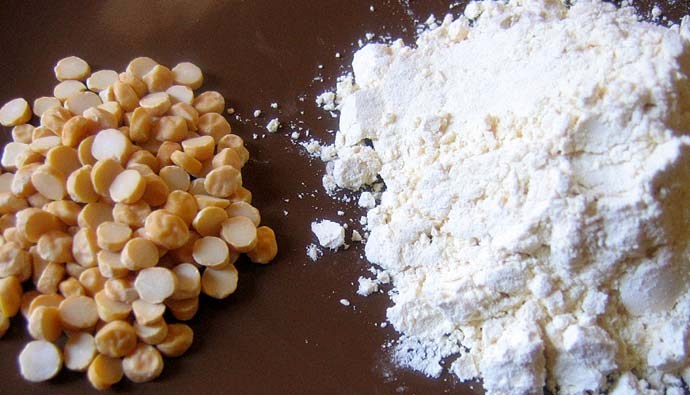
Make Your Own Chickpea Flour


You will find in some Indian, Turkish, Italian, Spanish and French recipes that it will ask for chickpea flour. But finding a store that stocks chickpea flour can be difficult. Here is how you can make your own in little to no time at all.
Chickpea flour — also known as besan, gram flour, channa flour, harina de garbanzo — is a popular ingredient in many Old World cuisines. It is the used in the batter for Indian pakoras. The French of Provence make a popular bread called soccawith it that they bake in wood-fired ovens. Persian Jews mix it with ground chicken to form gundi dumplings. Chickpea flour can also be a great substitute for wheat flour in many recipes and for thickening sauces. Good news for those who want to go gluten-free!
Here's how to make your own. It should yield around 1 1/2 cups.

Chickpea Flour Recipe

  • 2 cups of dried chickpeas
  1. Add the chickpeas in small batches to a food processor, coffee grinder or blender and process until pulverized and smooth.
  2. Run through a sieve to remove any large particles. Use as directed in recipes.
  • Toasted Chickpea Flour: toast the chickpeas in a 400°F oven for 15-20 minutes, or until the chickpeas start to give off a toasted aroma and are lightly browned. Cool and proceed with the recipe above.

Tuesday, April 9, 2013

What is Chickpea Flour?


In the United States, most people automatically think of wheat when a recipe calls for flour, but ground wheat is only one type of flour among dozens. Chickpea flour adds a nutty taste to baking, soups and sauces, and can substitute for wheat flour in most recipes. Both wheat-free and gluten-free, chickpea flour is also easier to digest than other wheat-flour substitutes, such as soy flour.


Identification

Chickpea flour is nothing more than dried chickpeas, ground to a flour-like consistency. Other names for chickpea flour include gram flour, cici flour and garbanzo bean flour. Besan is chickpea flour made with unroasted chickpeas. Chana is flour made from roasted chickpeas.

Nutritional Facts

One cup--92g--of chickpea flour provides 356 calories, including 52 calories from fat. A 1-cup serving of chickpea flour also contains 6g of total fat, 1g of saturated fat and no trans fat. With 53.2g of total carbohydrate, a cup of chickpea flour provides 18 percent of your recommended daily value--DV--of carbohydrate and 40 percent of the recommended DV of dietary fiber, as well as 41 percent of the recommended DV of protein. When you eat a 1-cup serving of chickpea flour, you'll also be getting vitamin A, vitamin K and several B-complex vitamins, including thiamin, riboflavin, niacin, pantothenic acid and a full day's supply of folate. Chickpea flour provides 25 percent of the DV for iron, 74 percent of the recommended DV for manganese, and various amounts of other trace elements and minerals, including calcium, magnesium, phosphorus, potassium, sodium, zinc, copper and selenium.


Availability

If your grocery store has an extensive international foods section, you may find chickpea flour in the Indian foods section under the names gram flour, besan or chana flour. Most groceries that sell Indian foods and ingredients carry chickpea flour, since it's a main ingredient in many Indian foods. Health food stores also carry a variety of non-wheat and gluten-free flours, often including chickpea flour. If you can't find chickpea flour locally, look for it through a health food supplier or co-op online.


Using Chickpea Flour in Recipes

Substitute 7/8 cup of chickpea flour for 1 cup of wheat flour for most baked goods. For yeast-raised breads, use 1 part chickpea flour to 4 parts wheat or spelt flour, says Margaret Wittenberg in "Good Food: The Complete Guide to Eating Well." In recipes that use flour for thickening, substitute chickpea flour for wheat flour or cornstarch on a one-to-one ratio. Use toasted chickpea flour for baking, Wittenberg advises, and untoasted for soups, fritters and dips such as hummus.


Read more: http://www.livestrong.com/article/160151-chickpea-flour-facts/#ixzz2PzLrWY6O

Tuesday, February 5, 2013

What is Spelt anyway?


Spelt's Origin, Genetic Makeup, and Nutritional Value

Spelt is an ancient grain that has lately made a comeback in North America, even though it has been popular through the decades in many European countries. Spelt is a non-hybrid distant relative to present day wheat. Spelt's uniqueness is derived from its genetic makeup and nutrition profile. Spelt has high water solubility, so nutrients are easily absorbed by the body making it easy to digest. It is high in protein (significantly higher than wheat), higher in B complex vitamins, and spelt is high in both simple and complex carbohydrates. These complex carbohydrates are an important factor in blood clotting and stimulating the body's immune system. Spelt is a suberb fiber resource. Spelt's nutty flavor doesn't just taste good, it has so many other nutritional benefits that are amazingly good for you! Keep reading to find out more about how spelt’s nutrients contribute to lower risk of cardiovascular (heart) disease, type II diabetes, and can lessen occurrences of migraine headaches.

Spelt is more difficult to process than modern wheat varieties, making it a little more expensive to purchase. Spelt's husk protects it from pollutants and insects which allows growers to avoid using pesticides, unlike other grains. The husk needs to be mechanically separated from the kernal before milling (this is done after it is thrashed and harvested). The spelt is stored in good, low moisture conditions in order to protect the kernal, retain nutrients, and maintain freshness. Over decades, modern wheat has been drastically changed to be easier to grow and harvest. This in turn increases yields, maintains a high gluten content in the wheat to produce high-volume commercial baked goods. On the other hand, spelt has preserved many of its original traits and continues to remain highly nutritious and full of flavor. And spelt can make fantastic breads and delicious pastries

A note about gluten:
Keep in mind that spelt does contain gluten. Gluten is made up of glutenin and gliadin molecules. Gluten provides elasticity to dough, which allows bread to rise. Even though spelt’s gluten is more fragile than other wheats, the bread produces fewer air pockets, it is well formed and maintains its flavorful taste. (Find baking tips below, so keep reading.)


Wheat or Gluten Allergies, Celiac Disease

If you have a wheat or gluten allergy, I recommend that you consult your doctor regarding which specific grains you should avoid. Most gluten testing is done with wheat gluten; therefore you know that you are certainly allergic to wheat. General testing for allergic reactions to food groups (like wheat) can identify problem areas but more specific tests may allow you to enjoy foods that you otherwise might rule out (like spelt).

If you have heard of confirmed, diagnosed Celiac sufferers who are able to eat spelt, then what you heard is true. However, if you have a gluten intolerance such as Celiac, you are strongly cautioned that there are differing degrees of severity and each individual case is different. You must be responsible to weigh the risk against the possible reward. If you have any allergies or intolerances to wheat, trying spelt should be a decision that you reach only after consulting your physician. Wheat-allergic patients can react as readily to spelt as they do to common wheat. If you do experience allergies to wheat and would like to try spelt, you may need to first cleanse your body of the toxins that your body finds in wheat.


Thanks to Jamie at JNC Enterprises where they love to farm as a family in Sugar City, Idaho.
http://www.histakes-spelt.com/index.php